Where Are They Now: Tess Taylor
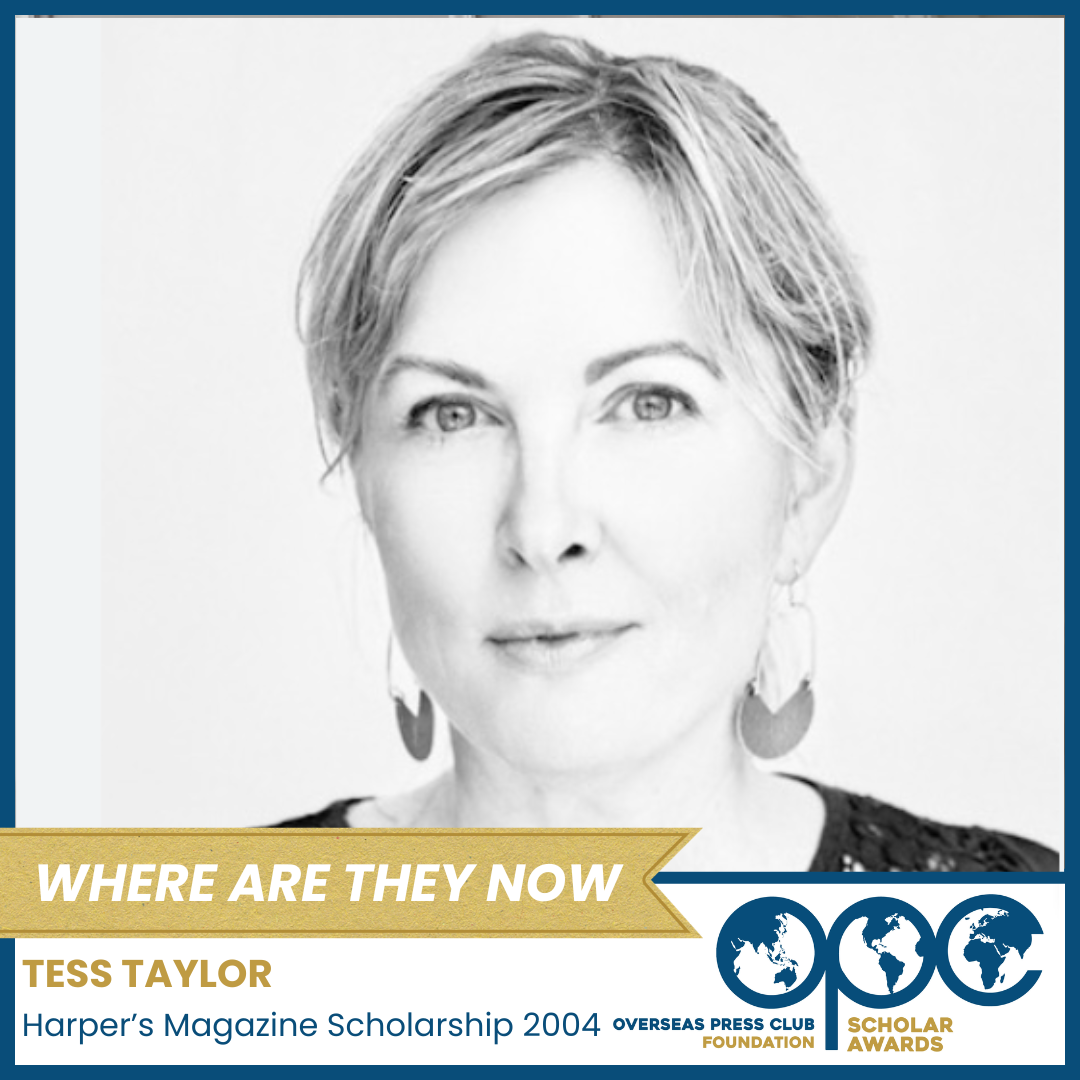
“I don't do much international reporting at the moment, but I carry the training with me. In 2018, I was a Distinguished Fulbright US Scholar at the Seamus Heaney Centre, Queen's University Belfast, working alongside Northern Irish poets Sinead Morrissey, Michael Longley, and Ciaran Carson — an incredible year that got me thinking hard about art as a practice of repair. I later wrote about the arts' role in the peace process, and the arts as a form of cultural repair, for Harper's. That year left me convinced that part of our path back to sanity runs through careful and deliberate and widespread international exchange: residencies, friendships, soft diplomacy, forms of sharing across boundaries. That conviction is exactly why an organization that trains reporters — that teaches people to look closely, cross borders, and report back — matters more now than ever, especially as OPC itself has had to speak out this year against visa rules that would keep foreign journalists from doing that same work here. I remain grateful to you.
My own path since the OPC Foundation scholarship runs through poetry and theater, but my journalistic background is with me. My new book, COME BITE (Milkweed Editions, Spring 2027), is hyperlocal in address but epic in scope. LAST WEST: ROADSONGS FOR DOROTHEA LANGE, my documentary theater piece, actually began as an act of travel reporting — retracing Lange's own routes through Depression-era California; it plays the Oakland Museum this October and is in development with Marin Theatre Company for 2027. I'm also currently reviewing Carolyn Forché's new poetry collection for the New York Times, weighing her international lyric reportage.
This is an important group and I am honored to be part of it. Grateful, always, to an organization that trains people to see the world and tell its complex truths.”
Tess Taylor